
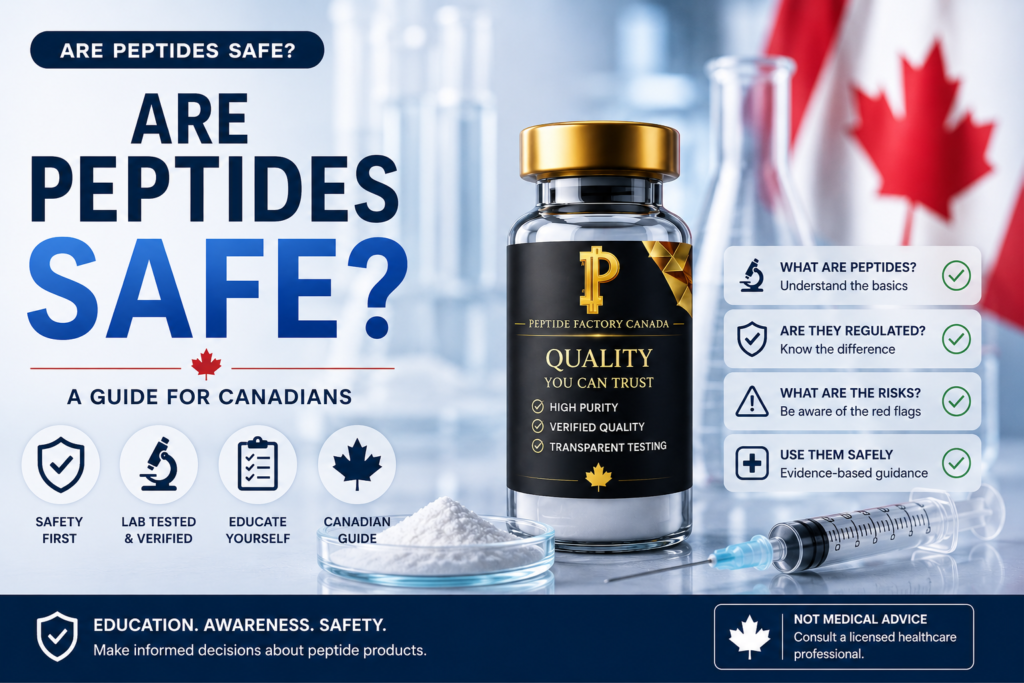
Peptides are everywhere right now
Peptides are widely discussed in wellness, skincare, supplement, fitness, and medical spaces. You may see terms like peptide therapy, peptide injections, injectable peptides, research peptides, compounded peptides, collagen peptides, hydrolyzed collagen peptides, copper peptides, skincare peptides, GLP-1 peptides, weight-loss peptides, bodybuilding peptides, anti-aging peptides, longevity peptides, recovery peptides, and peptide supplements.
The challenge is that “peptides” is not one product category. A peptide in a prescription medication is not the same thing as a collagen peptide powder. A topical copper peptide serum is not the same thing as an injectable peptide vial sold online. A compounded peptide is not the same thing as an approved drug. And a product labeled “for research use only” is not automatically safe, legal, or appropriate for human use.
Because peptide marketing can be confusing, the safest way to think about peptides is by category: what the peptide is, how it is made, how it is used, whether it is authorized, and whether it is being supervised by a qualified healthcare professional.
What are peptides?
Peptides are short chains of amino acids. Amino acids are the building blocks that form proteins, and peptide bonds are the links that hold amino acids together. The National Center for Biotechnology Information describes a peptide as a short string of 2 to 50 amino acids. Longer chains may be described as oligopeptides, polypeptides, or proteins, depending on the context and length. [1]
A simple way to picture it: amino acids are like letters, peptides are like short words, and proteins are like full sentences or paragraphs. Your body naturally uses endogenous peptides, peptide hormones, neuropeptides, antimicrobial peptides, signal peptides, and other biologically active peptides for many normal functions. For example, insulin is a 51-amino-acid peptide hormone involved in glucose regulation. [1]
That does not mean every synthetic peptide, peptide injection, peptide supplement, or peptide drug is safe. Natural biology and commercial products are different things. Peptide safety depends on dose, route of administration, sterility, purity, labeling, medical supervision, product quality, regulatory status, and the health history of the person using it.
Why are peptides so popular?
Peptide-related keywords appear across wellness, medicine, skincare, sports performance, and body composition conversations. People may search for peptide therapy near me, peptide injections for weight loss, BPC-157 peptide, CJC-1295 peptide, ipamorelin peptide, TB-500 peptide, MOTS-C peptide, GHK-Cu copper peptide, collagen peptides for skin, marine collagen peptides, bovine collagen peptides, and peptide serum for wrinkles.
Some of these searches relate to legitimate medical care. Some relate to cosmetic products. Some relate to dietary supplements. Others relate to online peptide vendors, bodybuilding forums, grey-market injectable peptides, or products marketed as research peptides. The terms may sound similar, but the risk profile is very different.
The most important distinction is not whether something contains a peptide. The most important distinction is whether the product is authorized, accurately labeled, manufactured under appropriate quality standards, used for an appropriate purpose, and supervised by a licensed healthcare professional when medical use is involved.
Are peptides safe?
There is no blanket answer. Some peptide-based medications are regulated prescription drugs. Some topical peptides are cosmetic ingredients. Some collagen peptides are dietary supplements. Some injectable peptides sold online are unauthorized drugs. Safety depends on the specific peptide, the product category, the dose, the route of administration, the manufacturer, the storage conditions, and the person using it.
Health Canada warned consumers in April 2026 about unauthorized injectable peptide drugs sold online and marketed for anti-aging, weight loss, bodybuilding, athletic performance, injury recovery, sleep, mental focus, and general wellness. The advisory states that, in Canada, peptides are generally regulated as prescription drugs and that authorized peptide drugs should be used under the care of a licensed healthcare professional. [2]
In the United States, the FDA has also identified safety concerns for certain bulk drug substances used in compounding, including several peptide substances. FDA concerns include immunogenicity, peptide-related impurities, active pharmaceutical ingredient characterization, limited safety information, and serious adverse events for some substances. [3]
The main peptide categories people search for
1. Prescription peptides and peptide-based medications
Some peptide drugs and peptide-like medications are prescribed for specific medical conditions. These are not the same as wellness peptides sold online. Prescription peptides may include peptide hormones, hormone analogues, GLP-1 receptor agonists, and other medications that require professional oversight, individualized assessment, and regulated dispensing.
For regulated prescription products, the key safety questions are medical: Is the medication appropriate for the patient? Is it prescribed by a licensed healthcare provider? Is it filled by a licensed pharmacy? Are dosing, storage, side effects, contraindications, and monitoring understood?
2. GLP-1 peptides, semaglutide, tirzepatide, and weight-loss injection searches
Many people searching for peptides are actually searching for GLP-1 medications, semaglutide, tirzepatide, retatrutide, weight-loss injections, or compounded GLP-1 products. Approved medications and unauthorized lookalikes are not interchangeable.
The FDA has warned about fraudulent compounded semaglutide and tirzepatide products, false pharmacy labeling, poor-quality active pharmaceutical ingredients, and dosing errors with compounded injectable semaglutide products, some requiring hospitalization. [4]
A regulatory-safe way to discuss this category is to avoid blanket phrases like “safe weight-loss peptide” and instead say: GLP-1 medications should be used only when prescribed by a licensed healthcare professional and obtained from legitimate, licensed sources.
3. Injectable peptides and peptide injections
Injectable peptides, peptide injections, peptide vials, lyophilized peptide powder, bacteriostatic water, subcutaneous peptide injections, intramuscular peptides, and research peptide kits are common online search terms. They are also where consumer risk can rise quickly.
Health Canada warns that unauthorized injectable peptide drugs have not been assessed for safety, efficacy, or quality. The agency says consumers using unauthorized peptide drugs may face risks including hormonal imbalance, mood changes, blood sugar imbalance, liver or kidney damage, blood clots, and growth of cancerous tumours. [2]
Health Canada also warns that unauthorized drugs may contain too much, too little, or none of the active ingredient; contain unlisted or unknown ingredients; contain contaminants such as solvents, heavy metals, glass, plastic, bacteria, fungi, or endotoxins; be poorly labeled; be improperly manufactured or stored; or interact with other medications or health products. [2]
4. Compounded peptides and compounding pharmacy peptide products
Compounded peptides and compounded peptide medications are another high-interest search area. Compounding may be appropriate in limited medical circumstances, but compounded drugs are not the same as approved drugs.
The FDA has stated that certain peptide bulk drug substances may present significant safety risks when used in compounding. The FDA table includes concerns for substances such as BPC-157, CJC-1295, injectable GHK-Cu, ipamorelin acetate, Melanotan II, MOTS-C, semax, selank, thymosin alpha-1, and TB-500, among others. [3]
This does not mean every compounded medication is inappropriate. It means compounded peptide products should not be treated as casual wellness products and should be used only through legitimate medical and pharmacy channels when clinically appropriate.
5. Research peptides, online peptides, and “not for human consumption” labels
Research peptides, lab peptides, peptide research chemicals, peptide vendors, peptide purity, peptide certificates of analysis, and “for research use only” are common online keywords. These terms can be misleading for consumers.
Health Canada states that products marketed as “For Research Use Only – Not for Human Consumption” are not made legal or exempt from regulatory requirements simply because they carry that label, and the agency advises consumers not to buy or use them. [2]
A research-use label should not be interpreted as a green light for self-injection, self-prescribing, or human use.
6. Collagen peptides, hydrolyzed collagen, and peptide supplements
Collagen peptides, hydrolyzed collagen, collagen hydrolysate, collagen peptide powder, marine collagen peptides, bovine collagen peptides, porcine collagen peptides, type I collagen, type II collagen, type III collagen, collagen supplements, collagen for skin, collagen for joints, and collagen for hair are popular supplement search terms.
Collagen peptides are broken-down forms of collagen commonly sold as powders or capsules. Cleveland Clinic notes that research on collagen peptide supplements is still evolving and that results can be conflicting. It also reports that studies suggest collagen peptide doses between 2.5 and 15 grams per day are generally considered safe, while noting possible digestive symptoms, allergy considerations, lack of guarantees, and the importance of product quality. [8]
In the U.S., dietary supplements are not approved by FDA before marketing, and FDA says it generally does not test supplements before they are sold to consumers. Manufacturers and distributors are responsible for meeting safety and labeling requirements, with FDA generally acting through postmarket enforcement. [6]
7. Skincare peptides, topical peptides, copper peptides, and peptide serums
Skincare peptides, topical peptides, copper peptide serum, GHK-Cu, Matrixyl, palmitoyl pentapeptide, acetyl hexapeptide-8, Argireline, signal peptides, carrier peptides, peptide moisturizer, peptide eye cream, peptide serum, peptide cream, and anti-aging skincare peptides are common beauty search terms.
Topical skincare peptides are different from injectable peptides. Cleveland Clinic describes peptides in skincare as strings of amino acids added to some skin care products, and notes that product quality and formulation matter. [7]
From a compliance perspective, skincare copy should avoid promising to reverse aging, rebuild collagen, erase wrinkles, repair tissue, or deliver injectable-like results unless those exact claims are properly substantiated and legally permitted. Softer language such as “supports a skincare routine,” “formulated with peptides,” or “helps improve the look of skin hydration” may be more appropriate depending on evidence and jurisdiction.
Common peptide keywords you may see online
The following peptide names and peptide-adjacent terms are included for education and search clarity. Mentioning a peptide does not mean it is recommended, proven safe, proven effective, authorized, or appropriate for human use.
BPC-157 peptide – Often searched as a recovery peptide, gut peptide, healing peptide, injury peptide, or bodybuilding peptide. Health Canada listed BPC-157 among unauthorized injectable peptide products seized in Canada, and FDA lists safety concerns for compounded products containing BPC-157. [2][3]
CJC-1295 peptide – Often searched with growth hormone peptide, GHRH peptide, CJC-1295 DAC, and CJC-1295/ipamorelin. FDA lists concerns for compounded CJC-1295, including limited clinical data and serious adverse events such as increased heart rate and systemic vasodilatory reaction. [3]
Ipamorelin peptide – Often searched with growth hormone secretagogue, anti-aging peptide, muscle growth peptide, and CJC-1295/ipamorelin. FDA lists concerns for compounded ipamorelin acetate, including limited safety information for certain injectable routes. [3]
GHK-Cu and copper peptides – Often searched as copper peptide serum, GHK-Cu peptide, injectable GHK-Cu, skin peptide, hair peptide, and anti-aging peptide. Topical skincare use and injectable use are not the same. Health Canada listed GHK-Cu among seized unauthorized injectable peptide products, and FDA lists concerns for injectable GHK-Cu. [2][3][7]
TB-500 and thymosin beta-4 fragment – Often searched as a recovery peptide, repair peptide, athletic performance peptide, or injury peptide. FDA lists concerns for compounded TB-500/thymosin beta-4 fragment, including lack of human exposure data for drug products containing that fragment. [3]
MOTS-C peptide – Often searched as a mitochondrial peptide, longevity peptide, metabolic peptide, or wellness peptide. Health Canada listed MOTS-C in its unauthorized injectable peptide advisory, and FDA lists significant safety-risk concerns for compounded MOTS-C. [2][3]
Melanotan I and Melanotan II – Often searched as tanning peptides or injectable tanning peptides. Health Canada listed Melanotan I and II among unauthorized injectable peptide products, and FDA lists serious adverse event concerns for Melanotan II. [2][3]
KPV peptide, LL-37 peptide, semax, selank, DSIP, epitalon, SS-31, kisspeptin-10, AOD-9604, PEG-MGF, thymosin alpha-1 – These terms often appear in peptide therapy, peptide clinic, research peptide, longevity peptide, immune peptide, sleep peptide, metabolic peptide, or performance peptide searches. FDA and Health Canada materials include several of these names in safety or unauthorized-product contexts. [2][3]
Semaglutide, tirzepatide, retatrutide, and GLP-1 peptides – Often searched as weight-loss peptides, diabetes peptides, GLP-1 injections, GLP-1 medications, compounded semaglutide, compounded tirzepatide, and research GLP-1 peptides. FDA warns consumers to know the source of GLP-1 medicines and has raised concerns about fraudulent compounded products and dosing errors. [4]
Collagen peptides, hydrolyzed collagen, collagen hydrolysate, marine collagen, bovine collagen, porcine collagen – Often searched as collagen peptide powder, collagen supplement, collagen peptides for skin, collagen peptides for joints, and collagen peptides for hair. These are oral supplement terms and should not be confused with injectable peptide drugs. [6][8]
Peptide serum, peptide cream, peptide moisturizer, peptide eye cream, Matrixyl, palmitoyl pentapeptide, acetyl hexapeptide-8, Argireline – These are skincare peptide terms. They belong in a cosmetic/topical discussion, not an injectable peptide safety discussion. Product formulation, skin sensitivity, and claim substantiation still matter. [7][9][10]
Research peptides, peptide vendor, peptide purity, lyophilized peptide powder, peptide vial, bacteriostatic water, reconstituting peptides – These keywords often appear in online peptide sales. Products sold for research use are not automatically safe, legal, sterile, accurately labeled, or appropriate for human use. [2]
Peptide side effects and safety risks to understand
Peptide side effects depend on the product and route of use. A topical peptide serum may cause irritation or sensitivity. A collagen peptide supplement may cause digestive symptoms or raise allergy concerns, especially with marine collagen. A prescription peptide medication may have medication-specific side effects and monitoring requirements. An unauthorized injectable peptide may raise risks related to sterility, contamination, dosing, active ingredient quality, immune reactions, interactions, and lack of reliable clinical information. [2][3][6][7][8]
For unauthorized injectable peptides, the risk is not only the peptide name on the label. The risk also includes what is actually in the vial, whether the active ingredient is present at the stated strength, whether the product contains contaminants, whether it was stored correctly, and whether the user has medical conditions or medications that increase risk. [2]
The safest peptide decision is not based on hype, influencer testimonials, or a peptide keyword. It is based on evidence, authorization, product quality, and medical oversight.
Peptide product red flags
Be cautious with any peptide product, peptide clinic, peptide supplement, peptide injection, peptide vial, peptide stack, or peptide protocol that:
- Promises to reverse aging, melt fat, build muscle, heal injuries, balance hormones, repair tissue, improve sleep, sharpen mental focus, or optimize wellness without strong evidence and appropriate authorization.
- Uses claims like “safe peptide therapy,” “natural peptide injection,” “research peptide for human use,” or “FDA-grade peptide” in a way that could mislead consumers.
- Is sold as an injectable peptide without a prescription or outside a licensed pharmacy.
- Is labeled “for research use only” or “not for human consumption” but is promoted for personal use.
- Does not clearly identify the manufacturer, strength, route of administration, lot number, expiration date, storage instructions, adverse event information, or regulatory authorization.
- Uses before-and-after photos, influencer testimonials, affiliate marketing, or social media claims instead of appropriate clinical evidence.
- Is marketed as a safer alternative to prescription medication without adequate substantiation.
How to check peptide safety and regulatory status
- In Canada, Health Canada says authorized drugs have an eight-digit Drug Identification Number, or DIN, on the label, and a drug product sold in Canada without a required DIN is not compliant with Canadian law. [5]
- Health Canada also advises consumers to only buy prescription drugs from licensed pharmacies and to avoid unauthorized injectable peptide drugs and products labeled “For Research Use Only – Not for Human Consumption.” [2]
- In the U.S., FDA says dietary supplements are not approved before marketing and are not generally tested by FDA before sale. This matters for collagen peptides, peptide supplements, and other supplement-style products. [6]
- For health-related marketing, the FTC states that claims about the benefits or safety of health-related products generally require competent and reliable scientific evidence. [9]
- In Canada, the Competition Bureau says performance and effectiveness claims must be based on an adequate and proper test conducted before the claim is made. [10]
So, should you use peptides?
Do not self-prescribe peptides, especially injectable peptides. A prescription peptide medication supervised by a licensed clinician is very different from an online peptide vial, a research peptide, a bodybuilding peptide, a compounded peptide sold casually, or a peptide stack promoted on social media.
Before considering any peptide product, ask these questions:
- Is this a prescription peptide drug, a compounded peptide, a collagen peptide supplement, a skincare peptide, or an unauthorized injectable peptide?
- Is it authorized for sale where I live?
- Was it prescribed by a licensed healthcare professional for a specific and appropriate medical reason?
- Was it obtained from a licensed pharmacy or legitimate authorized retailer?
- Does the product label include required identifiers, ingredients, strength, lot number, expiration date, and storage information?
- Do I understand the potential peptide side effects, medication interactions, contraindications, injection risks, allergy risks, and warning signs?
- Are the claims supported by competent and reliable scientific evidence, or are they based mostly on hype and testimonials?
The bottom line
Peptides are not automatically good or bad. They are a broad category of amino-acid chains used throughout biology, medicine, skincare, supplements, and online wellness marketing. Some peptide-based medications are legitimate prescription drugs. Some skincare peptides and collagen peptides may be reasonable for some people when used appropriately. But unauthorized injectable peptides, research peptides, online peptide vials, and unverified peptide therapy products can carry serious safety, quality, and regulatory concerns.
When it comes to peptides, peptide injections, compounded peptides, collagen peptides, skincare peptides, copper peptides, GLP-1 peptides, and peptide supplements, the most responsible takeaway is simple: do not let a trending peptide keyword replace evidence, regulation, product quality, or licensed medical guidance.
Compliance note for publishing
This draft is intentionally educational and cautionary. It avoids claims that peptides diagnose, treat, cure, prevent, reverse, repair, optimize, or guarantee outcomes. It includes high-intent peptide keywords naturally, but frames high-risk terms such as BPC-157, CJC-1295, ipamorelin, TB-500, MOTS-C, Melanotan, research peptides, compounded peptides, and injectable peptides in a safety and regulatory context. Any final marketing copy should be reviewed against applicable laws, platform rules, professional guidance, and product-specific evidence before publication.
Sources used in blog body
[1] NCBI Bookshelf / StatPearls. Biochemistry, Peptide. https://www.ncbi.nlm.nih.gov/books/NBK562260/ Accessed June 9, 2026.
[2] Health Canada. Think twice before injecting peptides bought online: unauthorized products can seriously harm you. https://recalls-rappels.canada.ca/en/alert-recall/think-twice-injecting-peptides-bought-online-unauthorized-products-can-seriously-harm Accessed June 9, 2026.
[3] U.S. Food and Drug Administration. Certain Bulk Drug Substances for Use in Compounding that May Present Significant Safety Risks. https://www.fda.gov/drugs/human-drug-compounding/certain-bulk-drug-substances-use-compounding-may-present-significant-safety-risks Accessed June 9, 2026.
[4] U.S. Food and Drug Administration. FDA’s Concerns with Unapproved GLP-1 Drugs Used for Weight Loss. https://www.fda.gov/drugs/drug-alerts-and-statements/fdas-concerns-unapproved-glp-1-drugs-used-weight-loss Accessed June 9, 2026.
[5] Health Canada. Drug Identification Number (DIN). https://www.canada.ca/en/health-canada/services/drugs-health-products/drug-products/fact-sheets/drug-identification-number.html Accessed June 9, 2026.
[6] U.S. Food and Drug Administration. Questions and Answers on Dietary Supplements. https://www.fda.gov/food/information-consumers-using-dietary-supplements/questions-and-answers-dietary-supplements Accessed June 9, 2026.
[7] Cleveland Clinic. Peptides for Skin Care: Are They Worth It?. https://health.clevelandclinic.org/peptides-for-skin Accessed June 9, 2026.
[8] Cleveland Clinic. Collagen Peptides: Benefits and Side Effects. https://health.clevelandclinic.org/what-do-collagen-peptides-do Accessed June 9, 2026.
[9] Federal Trade Commission. Health Products Compliance Guidance. https://www.ftc.gov/business-guidance/resources/health-products-compliance-guidance Accessed June 9, 2026.
[10] Competition Bureau Canada. Performance claims not based on an adequate and proper test. https://competition-bureau.canada.ca/en/deceptive-marketing-practices/types-deceptive-marketing-practices/performance-claims-not-based-adequate-and-proper-test Accessed June 9, 2026.
