
Description
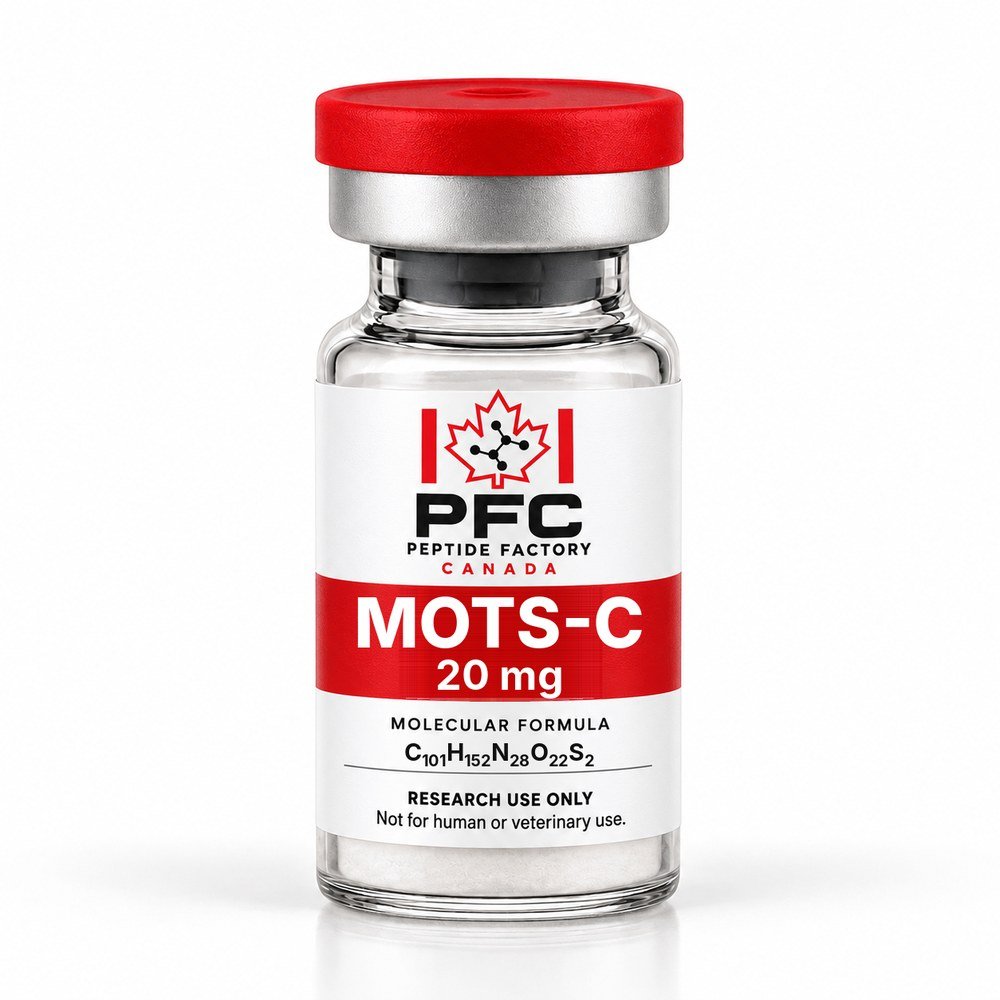
MOTS-c is a 16-residue peptide encoded in the mitochondrial genome (12S rRNA region). It is one of the few known ‘mitochondrial-derived peptides.’
Research context
Research focuses on its role as a mitochondrial-to-nuclear signal, including AMPK activation, metabolic regulation and exercise-related adaptation in animal models.
MOTS-c at a glance
- Compound: 16-residue mitochondrial-derived peptide encoded in the 12S rRNA region
- Research areas: mitochondrial-to-nuclear signalling, AMPK activation, metabolic regulation
- Supplied as: 20 mg or 40 mg lyophilized powder in a sealed glass vial
Handling and reconstitution
Let the MOTS-c vial reach room temperature before opening to limit condensation. Reconstitute with bacteriostatic water, sterile water or a buffer suited to your assay, adding the diluent slowly down the vial wall and swirling gently rather than shaking. If the powder doesn’t dissolve fully, a dilute acetic acid solution may help where your protocol allows. Aliquot reconstituted MOTS-c to avoid repeated freeze–thaw cycles, and record the lot number with your experimental data.
Specifications
| Amount per vial | 20 mg or 40 mg (choose above) |
|---|---|
| Form | Lyophilized (freeze-dried) powder in a sealed glass vial |
| Storage | Store sealed vials at −20 °C, away from light. Once reconstituted, keep at 2–8 °C. |
| Intended use | In-vitro and laboratory research only |
For laboratory research use only. Not for human or veterinary use, and not a drug, food, cosmetic or supplement. Sold only to qualified researchers who accept our Research Use Policy.

Reviews
There are no reviews yet.