
If you are wondering how to eat on retatrutide, start with a protein-first, hydration-aware approach designed to support nutrition and GI comfort. Retatrutide is an investigational GIP, GLP-1, and glucagon receptor agonist being studied in clinical trials for obesity and related metabolic conditions. Because it remains investigational, this guide is educational nutrition content only—not medical advice or a protocol for use. Anyone using an approved incretin-based medication should follow the care plan of their physician, pharmacist, and registered dietitian; regulators warn against unauthorized retatrutide products.
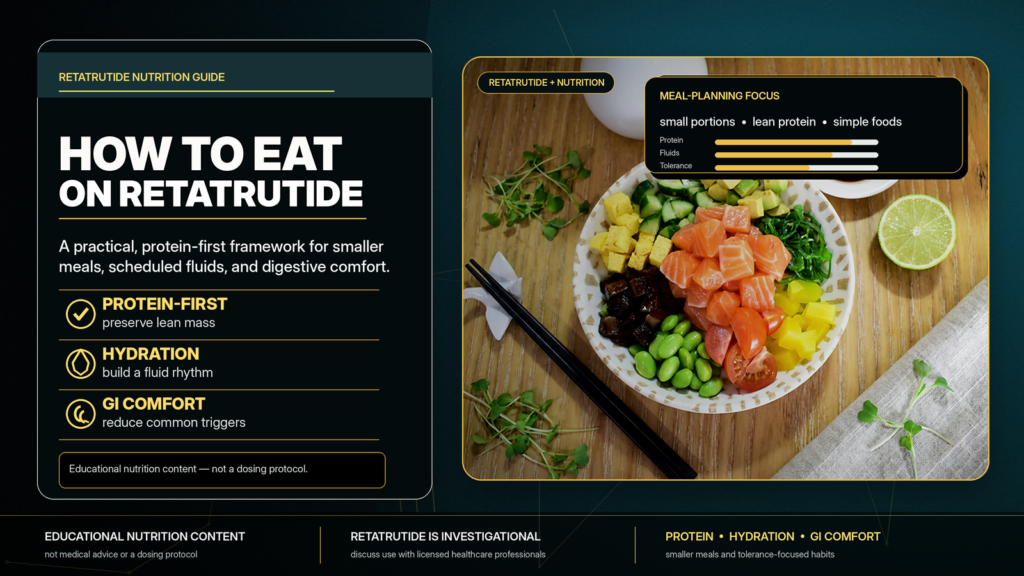
Quick Answer: How to Eat on Retatrutide
- Make protein the anchor. When appetite is low, meals should start with an easy-to-tolerate protein source such as Greek yogurt, eggs, chicken, fish, tofu, cottage cheese, or a protein shake.
- Use smaller meals instead of oversized plates. GLP-1-style appetite changes can make large meals feel uncomfortable. Smaller, slower meals are often easier to tolerate.
- Schedule fluids. Reduced appetite can also reduce routine drinking. A water bottle, low-sugar electrolyte option, or herbal tea routine can help maintain hydration.
- Choose gentle, nutrient-dense foods. Lean protein, cooked vegetables, soups, oats, rice, potatoes, berries, bananas, and yogurt are practical starting points.
- Limit foods that commonly worsen symptoms. Very greasy meals, large portions, heavy alcohol intake, sugary drinks, and fast eating may increase nausea, reflux, bloating, or constipation in susceptible individuals.
- Keep the regulatory context clear. Retatrutide is not an approved consumer medication, and this article does not recommend purchasing or using unauthorized products.
Table of Contents
- Why Retatrutide Changes Eating Patterns
- The Five Nutrition Priorities
- Phase 1: Build the Framework Before Appetite Drops
- Phase 2: Eating When Nausea, Bloating, or Low Appetite Appears
- Phase 3: Sustaining Nutrition During Ongoing Weight-Loss Research
- Best Foods to Prioritize
- Foods to Limit or Avoid
- Sample Day of Eating
- Protein, Muscle, and Resistance Training
- Hydration, Fiber, and Constipation Support
- When to Contact a Healthcare Professional
- Frequently Asked Questions
- Glossary
- References
Why Retatrutide Changes Eating Patterns
Retatrutide is being studied as a triple hormone receptor agonist that activates receptors for GIP, GLP-1, and glucagon. This mechanism is the reason the nutrition conversation is different from a standard calorie-reduction diet. Incretin-based therapies can reduce appetite, change food cravings, slow or alter digestive comfort, and make smaller portions feel more satisfying. [1][2][5]
That can be helpful for weight-management research, but it can also create practical nutrition problems. If someone is not hungry, they may unintentionally skip protein, fluids, fiber, and micronutrient-rich foods. Recent nutrition commentary on GLP-1 receptor agonist therapy highlights the need to preserve lean mass, monitor micronutrients, manage gastrointestinal symptoms, and support long-term eating behaviour rather than relying on appetite suppression alone. [5]
The practical takeaway
A retatrutide-focused nutrition article should not simply tell readers to “eat less.” A safer, more useful approach is to show them how to build smaller meals that still deliver protein, fluids, fiber, vitamins, minerals, and enough dietary variety to support health while appetite is reduced.
How to Eat on Retatrutide: Five Nutrition Priorities
1. Protein comes first
When food volume drops, protein should be the first nutrient protected. Protein helps support lean mass during weight loss, and nutrition experts discussing GLP-1 receptor agonist therapy have proposed ranges such as 0.8–1.6 g/kg/day or roughly 80–120 g/day in some adult contexts, while emphasizing that ideal targets remain individualized and require more research. [5]
Practical protein options include Greek yogurt, cottage cheese, eggs, chicken, turkey, fish, tofu, tempeh, lentils, and protein powders when whole foods are not appealing. The goal is not to force huge meals; it is to distribute protein across the day in manageable portions.
2. Smaller meals reduce food-volume pressure
Large meals can become uncomfortable when satiety is stronger or gastric emptying is altered. Small meals, slow eating, and avoiding “stuffed” fullness are common symptom-management strategies discussed in GLP-1 nutrition guidance. [5]
A useful pattern is to treat meals as small nutrition check-ins rather than large events: protein plus one gentle carbohydrate or vegetable, eaten slowly, with a pause before deciding whether more food is needed.
3. Hydration needs a routine
Hydration often drops when appetite drops. Some people also drink less because a full stomach makes fluids feel uncomfortable. A simple routine can help: keep water visible, sip regularly, add low-sugar electrolytes when appropriate, and use herbal tea or broth when plain water is not appealing.
4. Fiber supports digestion, but timing matters
Constipation is a common concern with GLP-1-style therapy. Fiber can help, but jumping from a low-fiber diet to a very high-fiber diet can worsen bloating. Build gradually with oats, berries, cooked vegetables, beans or lentils in tolerated amounts, chia or ground flax, and adequate fluids.
5. Fats should be moderate, not eliminated
Very greasy meals may worsen nausea or reflux for some people, but completely eliminating fat is not the answer. Rapid weight loss can increase gallstone risk, and nutrition discussions around GLP-1 receptor agonists include gallbladder considerations, hydration, fiber, and appropriate clinical follow-up. [5] Choose smaller portions of olive oil, avocado, nuts, seeds, eggs, and fatty fish rather than large fried meals.
Phase 1: Build the Framework Before Appetite Drops
For readers asking how to eat on retatrutide before appetite drops, the easiest time to build a nutrition routine is early. This phase is about preparation, not restriction. Create a kitchen and meal rhythm that still works on days when eating feels less automatic.
- Choose three easy proteins that require almost no thought, such as Greek yogurt, eggs, canned tuna or salmon, cottage cheese, chicken breast, tofu, or ready-to-blend protein powder.
- Stock gentle carbohydrates: oats, rice, potatoes, whole-grain toast, bananas, applesauce, berries, and plain crackers.
- Keep low-prep vegetables ready: cooked carrots, spinach, cucumber, soups, frozen vegetables, and simple salad greens.
- Set a hydration cue: a marked water bottle, tea after meals, broth at lunch, or reminders on a phone.
- Practice stopping at comfortable fullness rather than cleaning the plate.
Simple starter plate
A practical plate during this phase is small and balanced: one palm-sized protein, one half-cup of a tolerated carbohydrate, and a small serving of cooked vegetables or fruit. This keeps the meal structured without making food volume overwhelming.
How to Eat on Retatrutide When Nausea or Bloating Appears
When deciding how to eat on retatrutide during periods of nausea, the priority is not culinary perfection. Focus on keeping down fluids, protecting protein intake as tolerated, and avoiding foods that predictably worsen symptoms. Nausea, vomiting, and constipation are among the gastrointestinal symptoms discussed with GLP-1 receptor agonist therapy, especially around titration and higher doses. [5]
Gentle food options
- Cold Greek yogurt with berries or a spoonful of protein powder mixed in.
- Protein smoothie made with milk or an alternative milk, protein powder, banana, and ice.
- Chicken or tofu soup with rice, noodles, or potatoes.
- Hard-boiled eggs, cottage cheese, or tuna with crackers.
- Banana, toast, applesauce, rice, oatmeal, or broth when the stomach feels unsettled.
Tolerance tactics
- Eat slowly. Set the fork down between bites and stop before fullness turns into pressure.
- Keep meals low in grease. High-fat fried meals can sit heavy and may worsen nausea or reflux.
- Use cold or room-temperature foods when smells trigger symptoms. Warm food aromas can be hard to tolerate for some people during nausea periods.
- Do not force large meals. A small protein smoothie or yogurt can be more useful than skipping food entirely.
- Ask for help early. Persistent vomiting, dehydration, severe abdominal pain, or inability to maintain fluids needs medical evaluation.
Phase 3: Sustaining Nutrition During Ongoing Weight-Loss Research
Over time, how to eat on retatrutide becomes a question of consistency rather than symptom management. Once appetite suppression feels more predictable, use protein at most meals, vegetables or fruit daily, slow carbohydrates in portions that match activity, adequate fluids, and regular resistance training.
What to track beyond the scale
- Protein consistency: Are most meals anchored by protein?
- Hydration: Is urine consistently very dark, or are headaches and constipation increasing?
- Strength: Are workouts or daily physical tasks getting easier, stable, or harder?
- Diet variety: Are fruits, vegetables, whole grains, and mineral-rich foods still showing up weekly?
- Digestive comfort: Are nausea, reflux, constipation, or diarrhea becoming patterns worth discussing with a clinician?
Best Foods to Prioritize
| Lean proteins | Chicken, turkey, white fish, salmon, tuna, eggs, Greek yogurt, cottage cheese, tofu, tempeh, lentils, protein powder |
| Gentle carbohydrates | Oats, rice, potatoes, quinoa, whole-grain toast, bananas, applesauce, berries, soups, crackers during nausea periods |
| Vegetables | Cooked carrots, spinach, zucchini, cucumber, bell peppers, leafy greens, frozen vegetables, soups, and simple salads as tolerated |
| Healthy fats | Olive oil, avocado, nuts, seeds, eggs, salmon, and nut butter in smaller portions |
| Hydration options | Water, herbal tea, broth, low-sugar electrolyte drinks when appropriate, and water-rich foods such as soups and fruit |
Foods to Limit or Avoid
- Fried or very greasy meals: These are common nausea, reflux, and bloating triggers for people with slowed or sensitive digestion.
- Large portions: Oversized meals can create pressure, nausea, or early fullness even when the food itself is healthy.
- Sugary drinks: They add calories without protein, fiber, or meaningful satiety and may worsen nausea for some people.
- Heavy alcohol intake: Alcohol can irritate the stomach, worsen dehydration, impair judgment around food, and interact with medications or medical conditions.
- Highly processed snacks: Chips, candy, pastries, and similar foods can crowd out protein and micronutrients when appetite is already low.
- Eating too fast: Speed matters. Fast eating can push someone past comfortable fullness before satiety signals are obvious.
How to Eat on Retatrutide: Sample Day
The following example shows how to eat on retatrutide while keeping portions small and protein-forward. It is a general educational template, not a calorie prescription; portions should be individualized for body size, activity, medical history, and clinician or dietitian guidance.
| Time | Meal idea | Protein focus | Comfort note |
| Morning | Greek yogurt with berries and oats | Greek yogurt or protein powder mixed in | Cold, easy, low-prep |
| Mid-morning | Egg, cottage cheese, or tofu snack with fruit | Eggs, cottage cheese, or tofu | Small volume, steady protein |
| Lunch | Chicken, fish, or tofu soup with rice or potatoes | Lean protein in soup | Warm broth supports fluids |
| Afternoon | Protein smoothie or shake | Protein powder, milk, or soy milk | Useful on low-appetite days |
| Dinner | Salmon, turkey, chicken, or tempeh with cooked vegetables | Palm-sized protein serving | Keep fats moderate and portions small |
| Evening | Cottage cheese, yogurt, or herbal tea | Optional light protein | Only if hungry or protein is low |
Protein, Muscle, and Resistance Training
Weight loss should ideally come from fat mass while preserving as much lean mass and function as possible. Nutrition commentary on GLP-1 receptor agonist therapy emphasizes protein and resistance training as key areas for clinical attention, while also noting that optimal protein targets require individualization and more prospective research. [5]
- Spread protein across the day rather than saving it for one large dinner.
- Use lower-volume protein when appetite is low: yogurt, smoothies, cottage cheese, eggs, fish, tofu, or protein powder.
- Pair nutrition with resistance training where medically appropriate.
- People with kidney disease, liver disease, eating disorders, diabetes medication changes, pregnancy, or complex medical histories need individualized guidance.
Hydration, Fiber, and Constipation Support
Constipation can become a barrier to consistent eating. A simple framework is fluids first, fiber gradually, and movement daily when safe. If constipation becomes persistent or painful, medical guidance is more appropriate than escalating supplements blindly.
- Fluids: Use a bottle, scheduled tea, broth, or low-sugar electrolyte option when appropriate.
- Fiber: Increase slowly with oats, berries, cooked vegetables, chia, ground flax, beans, lentils, and whole grains as tolerated.
- Movement: Walking after meals can support digestion and blood glucose regulation for many people.
- Clinical support: Ask a clinician about constipation treatments if hydration, fiber, and movement are not enough.
When to Contact a Healthcare Professional
This article cannot diagnose symptoms or determine whether a medication is appropriate. Seek medical advice promptly for persistent vomiting, signs of dehydration, severe or worsening abdominal pain, fainting, allergic symptoms, jaundice, black or bloody stools, severe constipation, blood sugar concerns, or any symptom that feels unusual or intense.
Regulators have also warned against unauthorized products labelled for research use or not for human consumption when sold directly to consumers. The FDA specifically warns that unapproved products containing retatrutide sold this way may be of unknown quality and harmful, and Health Canada warns Canadians not to buy or use unauthorized injectable peptide drugs. [3][4]
Frequently Asked Questions
Is retatrutide approved for weight loss?
Retatrutide remains investigational. Lilly describes it as an investigational molecule being studied in Phase 3 trials and legally available only to participants in Lilly clinical trials. [1]
How many meals should someone eat on retatrutide?
There is no universal number. How to eat on retatrutide depends on appetite, symptoms, nutrition needs, and clinician guidance. Smaller meals or protein-focused mini-meals may be easier to tolerate than very large meals, especially if nausea or early fullness appears.
What should be eaten first when appetite is low?
Protein is usually the best first priority: yogurt, eggs, fish, chicken, turkey, tofu, cottage cheese, or a protein shake. After protein, add gentle carbohydrates, fruit or vegetables, and fluids as tolerated.
Should fats be avoided completely?
No. Very greasy meals may worsen symptoms, but moderate portions of healthy fats can still fit into a balanced pattern. Rapid weight loss is associated with gallstone considerations, so this is a topic to individualize with a clinician. [5]
What foods are most likely to worsen nausea?
Large meals, fried foods, strong smells, heavy alcohol, and high-sugar drinks are common practical triggers, though tolerance varies by person.
Can this article be used as a protocol?
No. This is educational content and should not be used as a medication protocol. It does not provide dosing, injection, compounding, or purchasing advice.
Do these nutrition principles also apply to approved incretin medications?
Largely yes. Protein-first meals, consistent hydration, gradual fiber, and smaller portions reflect general nutrition guidance discussed for incretin-based therapy. Anyone taking an approved medication should still follow the plan set by their own physician, pharmacist, and registered dietitian.
How much protein is generally recommended when appetite is reduced?
Protein needs differ by body size, age, activity level, kidney function, and overall health. A registered dietitian can individualize a target, which is far more useful than a generic number found online.
How can someone protect muscle while losing weight?
The two most consistently recommended strategies are spreading adequate protein across the day and performing regular resistance training. Sufficient overall energy intake and sleep also support lean mass retention.
What are warning signs that food intake has become too low?
Persistent fatigue, dizziness, feeling cold, hair shedding, poor workout recovery, noticeable strength loss, mood changes, and constipation can all suggest intake is inadequate. These should be discussed with a healthcare professional rather than pushed through.
Is it fine to eat very little if appetite disappears?
No. Very low intake raises the risk of muscle loss, nutrient gaps, fatigue, and gallbladder problems. Reduced appetite is a reason to make food more nutrient-dense and easier to tolerate, not a reason to skip protein, fluids, or nutritious foods.
What tends to help with constipation?
Increasing fiber gradually, drinking fluids consistently through the day, and staying physically active are common first steps. Large sudden fiber increases can worsen bloating. A pharmacist or physician can advise on appropriate additional options.
What tends to help with nausea?
Smaller portions, eating slowly, choosing cooler or blander foods, limiting very greasy or heavily spiced meals, and spacing fluids slightly apart from meals are commonly suggested. Persistent, severe, or worsening nausea should be assessed by a clinician.
Should someone take a multivitamin or other supplements?
That depends on diet quality, bloodwork, medical history, and other medications. Supplement decisions are best made with a physician, pharmacist, or dietitian rather than adopted by default.
How much fluid should someone aim for?
Fluid needs vary with body size, climate, activity, and medical conditions such as heart or kidney disease. Drinking steadily through the day is usually easier to tolerate than large volumes at once. Anyone with a fluid restriction should follow their clinician’s direction.
Can alcohol be part of the picture?
Alcohol can worsen nausea and dehydration, may affect blood sugar in some situations, and adds little nutrition at a time when total intake is already lower. It is worth raising directly with the prescribing clinician.
What about caffeine and carbonated drinks?
Both can aggravate reflux, bloating, or general discomfort for some people, while others tolerate them without issue. Adjusting based on personal symptoms is reasonable.
Who should get personalized nutrition support instead of general guidance?
Anyone with diabetes, kidney or liver disease, gastrointestinal conditions, a history of disordered eating, pregnancy or breastfeeding, or who takes multiple medications should work directly with a physician and a registered dietitian rather than relying on general articles.
Glossary
| Retatrutide | An investigational triple hormone receptor agonist being studied for obesity and related metabolic conditions. |
| GLP-1 | Glucagon-like peptide-1, an incretin pathway involved in appetite, satiety, insulin secretion, and gastric emptying. |
| GIP | Glucose-dependent insulinotropic polypeptide, another incretin pathway involved in insulin and nutrient handling. |
| Glucagon receptor | A pathway involved in glucose regulation and energy metabolism. |
| Lean mass | Body tissue such as muscle and organs, distinct from fat mass. |
| Gastric emptying | The process of food leaving the stomach and entering the small intestine. |
References
[1] Lilly press release / TRIUMPH-1 Phase 3: https://www.prnewswire.com/news-releases/lillys-triple-agonist-retatrutide-delivered-powerful-weight-loss-in-pivotal-phase-3-obesity-trial-302778859.html
[2] Jastreboff et al., New England Journal of Medicine, 2023: https://www.nejm.org/doi/full/10.1056/NEJMoa2301972
[3] FDA: Concerns with unapproved GLP-1 drugs used for weight loss: https://www.fda.gov/drugs/drug-alerts-and-statements/fdas-concerns-unapproved-glp-1-drugs-used-weight-loss
[4] Health Canada: Think twice before injecting peptides bought online: https://recalls-rappels.canada.ca/en/alert-recall/think-twice-injecting-peptides-bought-online-unauthorized-products-can-seriously-harm
[5] Spreckley, Ruggiero & Brown, International Journal of Obesity, 2026: https://www.nature.com/articles/s41366-025-01952-w
Looking to source Retatrutide for your research? Peptide Factory Canada carries lab-tested Retatrutide with third-party COA documentation. View the Retatrutide product page for current specifications and availability.
