

Quick answer on TB-500 benefits: TB-500 is a synthetic seven-amino-acid fragment associated with thymosin beta-4. However, sellers widely promote it for recovery, wound healing and inflammation, but direct human evidence for TB-500 benefits remains extremely limited. Regulators have approved no human TB-500 dosage, researchers do not know its full side-effect profile, and WADA prohibits TB-500 in sport. Therefore, marketers extrapolate most positive claims from studies of full-length thymosin beta-4 rather than TB-500 itself.
For reference, last evidence review: August 6, 2026.
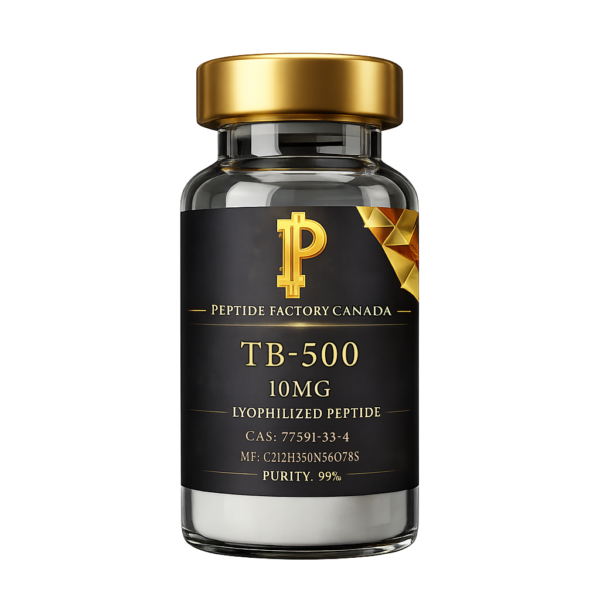
In addition, this evidence-based guide explains TB-500 benefits, dosage questions, side effects, legal and anti-doping status, and the important difference between TB-500 and thymosin beta-4. It is educational only and does not provide instructions for reconstitution, self-injection, cycling or treatment. Anyone considering a peptide for an injury, wound or health condition should speak with a licensed healthcare professional.
TB-500 Key Takeaways
- What it is: FDA describes TB-500 free base as a synthetic fragment corresponding to amino acids 17–23 of thymosin beta-4.
- What it is not: TB-500 is not the same molecule as full-length, 43-amino-acid thymosin beta-4.
- Benefits: Tissue-repair claims are biologically plausible but are not proven therapeutic benefits in humans.
- Dosage: No evidence-based, FDA-approved or Health Canada–approved human dosage exists.
- Safety: Human safety and long-term toxicity are not adequately characterized.
- Sport: The 2026 World Anti-Doping Agency Prohibited List includes thymosin beta-4 and its derivatives, including TB-500.
- Product quality: Identity, purity, sterility, aggregation and labeling can be material concerns outside controlled research.
What This Guide Covers
- What TB-500 is
- Claimed benefits and evidence
- Why there is no standard dosage
- Side effects and safety risks
- FDA, Canadian and anti-doping status
- Research-product quality checks
- Detailed TB-500 FAQ
What Is TB-500?
Writers commonly describe TB-500 as a synthetic peptide fragment related to thymosin beta-4 (Tβ4), a naturally occurring peptide involved in actin regulation, cell migration, inflammation and tissue repair. In its 2026 TB-500 briefing document, FDA describes TB-500 free base as a seven-amino-acid synthetic fragment corresponding to residues 17–23 of thymosin beta-4, with an acetyl group on the N-terminal leucine.
Importantly, that molecular distinction is essential. Specifically, full-length thymosin beta-4 contains 43 amino acids; TB-500 is a much shorter fragment. Therefore, evidence from a parent peptide, a topical formulation or a laboratory model cannot automatically establish the activity, dose, stability or safety of another molecule. Additionally, readers new to the subject may also want this plain-language guide to what peptides are and how peptide safety is evaluated.
| Question | Evidence-based answer |
|---|---|
| Is TB-500 an approved medicine? | FDA and Health Canada have established no approved therapeutic TB-500 product or labelled human indication. |
| Are TB-500 benefits proven? | No. Direct human efficacy evidence is insufficient. |
| Is there a standard TB-500 dosage? | No evidence-based, regulator-approved human dosage exists. |
| Are side effects known? | Only incompletely. Injection, immune, contamination and unknown long-term risks remain concerns. |
| Is TB-500 banned in sport? | Yes. WADA lists thymosin beta-4 and derivatives such as TB-500 under S2.3. |
TB-500 vs. Thymosin Beta-4
However, much of the online confusion around TB-500 comes from treating it as interchangeable with thymosin beta-4. Specifically, it is not. However, published work on full-length Tβ4 may help explain why scientists study related sequences, but it does not prove that commercially available TB-500 has the same pharmacology.
| Feature | TB-500 | Thymosin beta-4 |
|---|---|---|
| Structure | Seven-amino-acid synthetic fragment described by FDA | Naturally occurring 43-amino-acid peptide |
| Evidence base | Very limited direct human evidence | Broader preclinical literature and some human studies of specific formulations |
| Approved human dosage | None | Do not infer general approval from experimental studies |
| Can evidence be transferred? | No. Molecule, formulation, route, dose and study population all matter. | |
A peer-reviewed review indexed by PubMed describes angiogenic, anti-inflammatory and wound-repair findings for full-length thymosin beta-4. A separate review of thymosin beta-4 biology discusses cell migration, angiogenesis and inflammatory pathways. However, these sources explain the scientific interest; they do not establish clinical benefits for TB-500 injections.
Potential TB-500 Benefits: Claims vs. Evidence
The most accurate summary is that TB-500 has proposed benefits, not established human therapeutic benefits. Specifically, FDA’s 2026 review found insufficient information to evaluate effectiveness for wound healing and noted a lack of TB-500-specific nonclinical pharmacology supporting that use.
| Common claim | Why it is discussed | What the evidence actually supports |
|---|---|---|
| Faster wound healing | Full-length Tβ4 has been studied in wound models and specific topical formulations. | Not proven for TB-500 in humans; FDA found the evidence insufficient. |
| Tendon or ligament recovery | Related biology involves cell movement, inflammation and tissue remodeling. | No robust clinical evidence establishes healing of human tendon or ligament injuries. |
| Muscle recovery | Marketing extrapolates from tissue-repair pathways and animal research. | No validated human treatment effect or predictable recovery timeline. |
| Reduced inflammation | Anti-inflammatory activity is reported in thymosin beta-4 research. | A fragment may behave differently; clinical research has not proven a TB-500-specific benefit. |
| Improved flexibility or performance | Mainly anecdotal and promotional claims. | No established therapeutic or performance benefit; anti-doping risk is clear. |
Wound healing
First, FDA’s 2026 review of TB-500 free base and TB-500 acetate evaluated wound healing. However, reviewers found no adequate evidence to determine effectiveness. Moreover, studies of full-length Tβ4 in dermal or corneal repair are scientifically relevant but cannot substitute for TB-500 trials that verify the exact molecule, formulation, route and clinical outcome.
Tendon, ligament and muscle recovery
Next, sellers frequently promote TB-500 for soft-tissue recovery, yet there are no robust controlled human trials establishing that it repairs tendon tears, ligament injuries or muscle damage. However, pain or swelling that improves after any intervention does not necessarily mean tissue structure, strength or function has recovered. Proper diagnosis, rehabilitation and graded loading remain central to evidence-based injury care.
Inflammation and tissue remodeling
Similarly, thymosin beta-4 research includes effects on inflammatory signaling, cell migration and angiogenesis. However, these mechanisms can be relevant to repair, but a biological mechanism is not a clinical outcome. Angiogenesis and growth signaling can also create theoretical safety concerns in people with cancer, unexplained masses or abnormal tissue growth.
TB-500 Benefits Research: How Strong Is the Evidence?
Therefore, researchers should separate the evidence into three levels:
- Full-length thymosin beta-4 studies: the broadest literature, including preclinical work and some human studies of defined formulations. Relevant background, but not direct TB-500 proof.
- TB-500-specific studies: sparse, particularly for therapeutic use in humans.
- Anecdotes and vendor claims: unable to establish identity, dose, causation, comparative effectiveness or long-term safety.
Moreover, FDA reported that it did not identify human data on drug products containing the nominated TB-500 substances administered by any route. Moreover, it did not identify the toxicology studies normally needed to characterize acute, repeat-dose, reproductive, genetic or carcinogenic risk. In evidence grading, researchers must not translate “not studied” into “safe.”
TB-500 Dosage: Why There Is No Evidence-Based Standard
There is no established, FDA-approved or Health Canada–approved TB-500 dosage for human treatment. Moreover, no approved label defines an indication, route, dose, frequency, treatment duration, contraindications, monitoring plan or stopping rules. Therefore, internet schedules are not evidence-based medical guidance.
In addition, researchers cannot responsibly separate dosage from product identity and clinical context. For example, TB-500 free base, TB-500 acetate and full-length thymosin beta-4 are not interchangeable names. Formulation, purity, aggregates, route, patient health, medications and the target condition could all change exposure and risk.
For that reason, this guide intentionally does not provide injection, reconstitution, cycling or stack instructions. For example, in a legitimate human study, an approved protocol would control dosing with eligibility screening, product characterization, adverse-event monitoring and predefined stopping criteria.
TB-500 Side Effects and Safety Risks
The complete TB-500 side-effect profile is unknown because adequate human safety studies are lacking. Therefore, the absence of a long adverse-event list is not evidence of safety; it reflects limited measurement.
Potential and theoretical risks
- Injection-related harm: pain, bleeding, bruising, infection, abscess, nerve or tissue injury.
- Immune reactions: injectable peptides may trigger immunogenicity, especially when aggregates or peptide-related impurities are present.
- Allergic reactions: the active substance, excipients, contaminants or impurities may cause hypersensitivity.
- Contamination and potency errors: poor controls may produce a non-sterile or degraded product with the wrong identity or concentration.
- Unknown medication interactions: researchers have not adequately characterized interactions with anticoagulants, immunosuppressants, cancer treatments, diabetes drugs, hormones and other medicines.
- Unknown long-term toxicity: repeat-dose, reproductive, genetic and carcinogenic risk remain inadequately defined.
- Theoretical growth-related concerns: pathways involving cell migration and blood-vessel formation warrant particular caution in people with cancer or abnormal tissue growth.
Therefore, people who are pregnant or breastfeeding, minors, people with active or prior cancer, immune disorders, cardiovascular disease, chronic wounds, infections or multiple medications should not rely on online peptide advice. Therefore, a qualified clinician can assess the underlying problem and safer evidence-based options.
TB-500 Benefits, Health Canada Status and Sport Rules
United States
In the United States, FDA’s July 23–24, 2026 Pharmacy Compounding Advisory Committee meeting considered TB-500 free base and TB-500 acetate for possible inclusion on the 503A Bulks List. The agency’s briefing document recommended against inclusion based on characterization concerns, lack of adequate effectiveness evidence, lack of human safety data and unknown risks. The FDA meeting page also explains that advisory committee recommendations are non-binding. Therefore, a committee discussion or vote is not FDA approval.
Canada
In Canada, Health Canada’s Drug Product Database contains product information for drugs approved for use in Canada. Therefore, readers can verify current authorizations through the official Health Canada Drug Product Database. Readers should not infer an approved therapeutic indication or standard human dosage from a product being marketed as “research use only.” For broader sourcing and regulatory context, see our guide to peptides in Canada, quality documentation and safety checks.
Competitive sport
Moreover, WADA prohibits TB-500 in sport. The official 2026 WADA Prohibited List includes thymosin beta-4 and its derivatives, such as TB-500, under S2.3 Growth Factors and Growth Factor Modulators. The prohibition applies at all times. Tested athletes should consult their anti-doping organization rather than a supplier, coach or social-media source.
TB-500 Benefits Claims and Research-Product Quality Risks
Additionally, peptides can be sensitive to manufacturing and storage conditions. For example, changes in pH, heat, concentration, excipients and impurities may promote degradation or aggregation, which can alter biological activity and immune risk. However, a “research use only” label does not demonstrate clinical safety, efficacy or approval for human use.
For example, qualified laboratory work should document:
- exact sequence and chemical form;
- lot-specific identity and purity testing;
- independent HPLC and mass-spectrometry results;
- sterility and endotoxin testing when relevant to the research protocol;
- aggregate and peptide-related impurity controls;
- storage, stability and chain-of-custody records;
- a certificate of analysis that matches the specific batch.
Our research peptides Canada quality guide explains COAs, analytical testing and supplier documentation in more detail. Additionally, qualified researchers can also view the site’s TB-500 research compound listing; it is for laboratory research only, not for human or veterinary use.
How to Evaluate TB-500 Benefits Claims Online
Before trusting a claim, therefore, ask:
- Is the source studying TB-500 itself or full-length thymosin beta-4?
- Is the evidence from humans, animals, cell culture or anecdotes?
- Did researchers verify the exact sequence and chemical form?
- Did the study use a topical, injectable or experimental formulation?
- Did independent assessors measure clinically meaningful outcomes?
- Did investigators systematically track adverse events and long-term outcomes?
- Does the claim provide a dosage despite the absence of an approved standard?
- Does the source disclose regulatory, anti-doping and product-quality limitations?
- Is the author selling the product or receiving affiliate compensation?
Therefore, be skeptical of guarantees, rapid-healing promises, precise universal timelines, claims of “no side effects,” or arguments that equate animal or Tβ4 results with proven TB-500 therapy.
Frequently Asked Questions About TB-500
1. What is TB-500?
In summary, TB-500 is a synthetic seven-amino-acid fragment associated with thymosin beta-4. Specifically, FDA describes the free-base form as corresponding to residues 17–23 of the full peptide. However, sellers market it online for recovery and tissue repair, but direct human evidence is very limited and it is not an approved standard treatment.
2. Is TB-500 the same as thymosin beta-4?
No. Instead, full-length thymosin beta-4 contains 43 amino acids, while TB-500 is a shorter synthetic fragment. Therefore, studies of thymosin beta-4 can provide biological context, but they do not prove that TB-500 has the same effects, safety, stability or appropriate route of administration.
3. Is TB-500 FDA-approved?
No. Moreover, FDA’s 2026 review states that TB-500 free base and TB-500 acetate are not components of FDA-approved drugs. However, a Pharmacy Compounding Advisory Committee discussion or recommendation does not constitute drug approval.
4. Is TB-500 approved in Canada?
In Canada, Health Canada has not established an approved therapeutic TB-500 indication or standard human dosage. Therefore, use the official Drug Product Database to verify whether Health Canada currently authorizes a drug for sale. Furthermore, “Research use only” is not a therapeutic approval.
5. What are the claimed benefits of TB-500?
For example, common claims include faster wound healing, tendon or ligament recovery, muscle repair, lower inflammation and improved flexibility. However, these claims are largely theoretical, preclinical, anecdotal or extrapolated from full-length thymosin beta-4 research. Therefore, they are not established TB-500 benefits in humans.
6. Does TB-500 heal tendons or ligaments?
However, there is no robust controlled human evidence proving that TB-500 heals tendon tears or ligament injuries. Moreover, symptom improvement would not by itself confirm structural recovery. Therefore, diagnosis, rehabilitation, progressive loading and appropriate medical follow-up remain important.
7. Does TB-500 help wounds heal faster?
Likewise, research has not established that benefit for TB-500 in humans. For example, researchers have studied full-length thymosin beta-4 in wound models and specific formulations, However, FDA found insufficient TB-500-specific evidence to evaluate effectiveness for wound healing.
8. Does TB-500 reduce inflammation?
Similarly, thymosin beta-4 research discusses anti-inflammatory activity, which helps explain scientific interest. However, direct clinical evidence has not established TB-500 as a safe or effective anti-inflammatory treatment in humans.
9. What is the standard TB-500 dosage?
Consequently, there is no evidence-based, FDA-approved or Health Canada–approved TB-500 dosage for human treatment. Furthermore, research has not validated online schedules as medical guidance and may not account for molecular identity, product quality, health conditions, medications or monitoring.
10. Can TB-500 be self-injected?
For that reason, this article does not provide injection instructions. Additionally, self-injection adds risks involving infection, dosing error, tissue injury, contaminants and immune reactions. Do not treat a product sold for laboratory research as approved for human administration.
11. What are the side effects of TB-500?
However, researchers do not know the complete side-effect profile. For example, potential concerns include injection-site injury, infection, allergic or immune reactions, contamination, incorrect potency, peptide aggregates, unknown drug interactions and unmeasured long-term toxicity.
12. Is TB-500 safe?
Accordingly, research has not established safety for human therapeutic use. Specifically, FDA identified a lack of clinical and nonclinical safety information Specifically, FDA raised concerns about characterization, aggregation, impurities and immunogenicity. Do not mistake limited reporting for evidence of low risk.
13. Are there cancer-related concerns?
In addition, theoretical concerns exist because thymosin beta-4 biology involves cell migration and angiogenesis. Moreover, FDA also reported that it did not identify carcinogenicity studies for the nominated TB-500 substances. However, this does not prove that TB-500 causes cancer, but it underscores the uncertainty, especially for people with active or prior cancer.
14. How quickly does TB-500 work?
Finally, no reliable human evidence establishes a predictable onset of action or healing timeline for TB-500. Instead, anecdotes or marketing generally drive precise claims such as “results within days,” not validated clinical endpoints.
15. How long does TB-500 stay in the body?
Furthermore, researchers have not adequately characterized human pharmacokinetics for therapeutic use. Therefore, do not assume a reliable clinical half-life or clearance timeline from websites or forums. Detection research for anti-doping purposes is not the same as an approved dosing study.
16. Is TB-500 banned in sports?
Yes. Specifically, the 2026 WADA Prohibited List names thymosin beta-4 and its derivatives, including TB-500, under S2.3. Moreover, WADA prohibits it at all times, not only during competition.
17. Is TB-500 legal to buy?
Importantly, legality depends on jurisdiction, product classification, intended use and how sellers market or supply the product. However, availability online does not establish approval, safety or lawful therapeutic use. Therefore, Canadians should consult current Health Canada information and obtain legal advice for situation-specific questions.
18. What does “research use only” mean?
In this context, it means the supplier represents the material for qualified laboratory or analytical research, not as an approved drug for human or veterinary treatment. However, the label does not replace identity, purity, stability, sterility or protocol-specific documentation.
19. Can TB-500 be combined with BPC-157?
Moreover, no well-established human evidence confirms the safety or effectiveness of a TB-500 and BPC-157 combination. Furthermore, combining two under-studied substances increases uncertainty around identity, interactions, adverse effects and causation. Therefore, do not treat online “stack” protocols as medical advice.
20. What evidence would researchers need to prove TB-500 benefits?
Ultimately, researchers would need well-designed studies using a precisely characterized product, a justified dose and route, appropriate controls, clinically meaningful outcomes, adequate follow-up and systematic adverse-event reporting. Moreover, reproducible human trials would need to distinguish TB-500 from full-length thymosin beta-4 and other derivatives.
TB-500 Benefits and Safety: The Bottom Line
In conclusion, TB-500 is an under-studied peptide fragment with strong marketing attention but uncertain clinical value. For example, the science around full-length thymosin beta-4 is interesting, particularly in tissue-repair and inflammation research, However, marketers should not use it as a shortcut to claim proven TB-500 benefits.
Therefore, as of August 2026, there is no approved human TB-500 dosage, the safety profile remains incomplete, and WADA prohibits it in sport. Therefore, anyone researching TB-500 because of an injury, chronic wound or health problem should start with qualified medical evaluation and evidence-based care—not an online protocol.
